
Common Conditions Treated by a General Surgeon
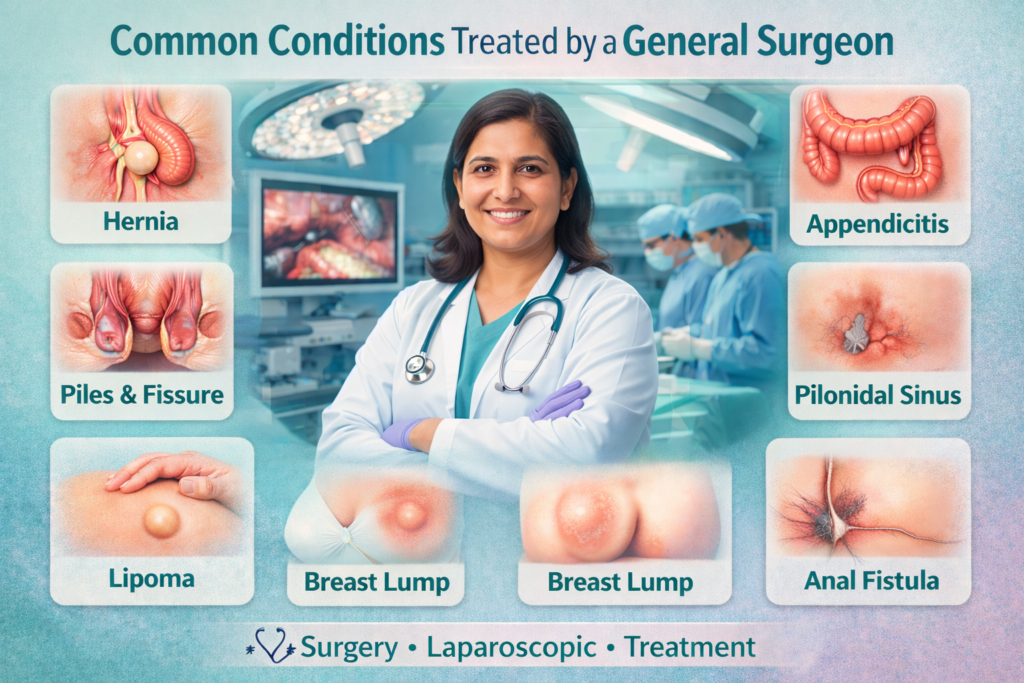
A general surgeon is a medical specialist who diagnoses and treats a wide range of conditions affecting the abdomen, digestive system, skin, soft tissues, breast, and rectal area. Many people assume that a surgeon is only needed for operations, but their role is much broader. A general surgeon helps identify symptoms, recommends the right treatment plan, performs surgeries when necessary, and supports patients during recovery.
With advances in laparoscopic surgery and minimally invasive surgery, many procedures today involve smaller cuts, less pain, and quicker recovery. This has made treatment easier and safer for patients dealing with common surgical conditions.
What Does a General Surgeon Treat?
General surgeons commonly treat conditions such as hernia, gallstones, appendicitis, piles, fissure, fistula, lipoma, breast lumps, and pilonidal sinus. Some of these conditions can be treated with medication and lifestyle changes in the early stages, while others may require surgery to prevent complications.
Hernia Treatment
A hernia develops when an organ or tissue pushes through a weak spot in the muscle wall. It usually appears in the abdomen or groin area and may look like a visible bulge. Many patients notice pain or discomfort while lifting heavy objects, coughing, or standing for long periods.
Common types include inguinal hernia, umbilical hernia, and hiatal hernia. Since a hernia does not heal on its own, surgery is often the best treatment option. Many patients now prefer laparoscopic hernia surgery because it involves smaller incisions and faster healing.
Gallstones and Gallbladder Surgery
Gallstones are hardened deposits that form inside the gallbladder. While some people may not experience symptoms, others may suffer from severe abdominal pain when the stones block the bile duct.
The most common symptoms of gallstones include pain in the upper right side of the abdomen, bloating, indigestion, nausea, and vomiting. These symptoms often become worse after eating oily or spicy foods. If gallstones repeatedly cause pain or infection, a general surgeon may recommend gallbladder removal surgery.
Today, laparoscopic gallbladder surgery is commonly performed because it offers less pain, shorter hospital stays, and quicker recovery.
Appendicitis Treatment
Appendicitis is one of the most common emergency conditions treated by a general surgeon. It occurs when the appendix becomes inflamed or infected.
The pain usually starts near the navel and then moves to the lower right side of the abdomen. Patients may also experience fever, nausea, vomiting, and loss of appetite. Since appendicitis can become dangerous if the appendix bursts, immediate treatment is necessary.
Most patients with appendicitis require appendix removal surgery, also known as appendectomy, to avoid serious complications.
Piles, Fissure, and Fistula Treatment
Piles, fissures, and fistulas are common conditions affecting the anal region. Although many people feel uncomfortable discussing them, early treatment can prevent pain and long-term problems.
Piles, also known as hemorrhoids, are swollen veins in the anus or rectum. They can cause bleeding, itching, swelling, and pain while passing stool. Mild piles can improve with medication, high-fiber foods, and proper hydration, while severe cases may need laser piles surgery.
An anal fissure is a small tear in the lining of the anus. It often develops because of constipation or passing hard stools. Patients usually experience sharp pain, burning sensation, and bleeding during bowel movements. Chronic fissures that do not heal with medicine may require minor surgery.
An anal fistula is an abnormal tunnel between the anus and nearby skin. It often causes swelling, pus discharge, pain, and repeated infections. In most cases, fistula surgery is required because the condition rarely heals on its own.
Lipoma Removal Surgery
A lipoma is a soft lump made of fatty tissue that develops under the skin. These lumps are usually harmless, but some can become painful or grow larger over time.
Lipomas commonly appear on the neck, shoulders, back, arms, or thighs. A general surgeon may recommend lipoma removal surgery if the lump causes discomfort, affects movement, or creates cosmetic concerns. The procedure is simple and usually completed in a short time.
Breast Lump Evaluation
Breast lumps are another common condition treated by general surgeons. Most lumps are non-cancerous, but they should never be ignored.
A breast lump may develop because of cysts, fibroadenoma, hormonal changes, or infection. In some cases, it may be linked to breast cancer. Women who notice pain, swelling, nipple discharge, or skin changes should seek medical advice as early as possible.
General surgeons may recommend tests such as ultrasound, mammogram, or biopsy to identify the exact cause and provide the right treatment.
Pilonidal Sinus Treatment
A pilonidal sinus is a small tunnel near the tailbone that becomes infected due to trapped hair and dirt. It is more common in people who sit for long hours.
Symptoms usually include swelling, redness, pain, pus discharge, and discomfort while sitting. If not treated on time, the infection can return repeatedly. A general surgeon may suggest drainage, laser treatment, or surgery based on the severity of the condition.
Conclusion
General surgeons treat a wide range of common surgical conditions, including hernia, gallstones, appendicitis, piles, fissure, fistula, lipoma, breast lumps, and pilonidal sinus. They help patients with diagnosis, treatment, surgery, and recovery.
With the help of advanced laparoscopic surgery and minimally invasive surgery, many procedures are now safer and involve faster recovery. If you are experiencing pain, swelling, bleeding, or digestive issues, consulting a general surgeon early can help prevent complications and improve your overall health.