
Gallbladder Disease: When Is Surgery Necessary — A Clear Guide
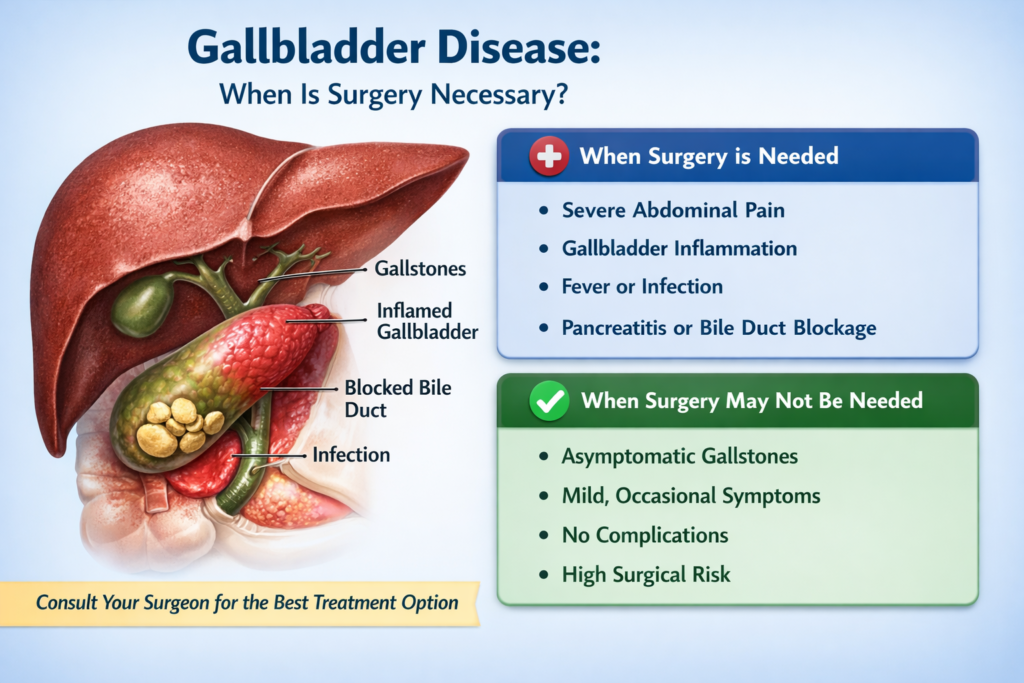
Gallbladder disease is a common digestive condition that affects people of all age groups, especially adults with sedentary lifestyles, irregular food habits, obesity, or hormonal factors. Many patients experience symptoms for months or even years before seeking medical advice, often assuming the discomfort is due to acidity or indigestion. Understanding when gallbladder disease requires surgery—and when it does not—is crucial to avoid complications and unnecessary anxiety.
This guide clearly explains gallbladder disease, its symptoms, available treatment options, and the situations where surgery becomes essential.
What Is the Gallbladder and Why Is It Important?
The gallbladder is a small organ located just below the liver. Its primary role is to store bile, a digestive fluid produced by the liver that helps in digesting fats. During meals, especially fatty foods, the gallbladder releases bile into the intestine. When this normal bile flow is disturbed, gallbladder disease can develop.
Gallbladder problems usually arise due to blockage, inflammation, infection, or functional abnormalities of this organ.
Common Gallbladder Conditions
Gallbladder disease includes a range of conditions. The most common among them are gallstones, inflammation of the gallbladder (cholecystitis), gallbladder polyps, and functional disorders like biliary dyskinesia. Gallstones form when bile components harden inside the gallbladder, often due to imbalance in cholesterol or bile salts. While many people have gallstones without symptoms, others develop significant pain and digestive issues.
Inflammation of the gallbladder may occur suddenly (acute cholecystitis) or gradually over time (chronic cholecystitis). In some cases, gallbladder infections or complications like pancreatitis may develop, making timely treatment critical.
Symptoms of Gallbladder Disease
Gallbladder symptoms vary in severity and frequency. Some patients experience mild discomfort, while others suffer severe pain that interferes with daily activities. Pain is typically felt in the upper right part of the abdomen and may radiate to the back or right shoulder. Symptoms often worsen after consuming oily or heavy meals.
Other symptoms may include nausea, vomiting, bloating, indigestion, fever, or yellow discoloration of the eyes and skin. Recurrent symptoms should never be ignored, as they often indicate ongoing gallbladder dysfunction.
When Is Surgery Necessary for Gallbladder Disease?
Surgery becomes necessary when gallbladder disease causes persistent symptoms or complications. The most common reason for surgery is symptomatic gallstones. Once gallstones start causing pain, medications and dietary changes offer only temporary relief. Surgery provides a permanent solution.
Acute cholecystitis is another condition where surgery is strongly recommended. Inflammation due to stone blockage can lead to infection, perforation, or abscess formation if left untreated. Early surgical removal of the gallbladder prevents these serious complications.
Patients who experience repeated gallbladder attacks are also advised surgery, as recurrent inflammation increases surgical risk over time. Gallbladder polyps larger than one centimeter are another indication for surgery due to the potential risk of cancerous change.
Surgery is usually recommended when:
- Gallstones cause repeated abdominal pain
- Acute or chronic gallbladder inflammation is present
- Fever or infection develops
- Gallstones cause pancreatitis or bile duct blockage
- Gallbladder polyps are larger than 1 cm
When Can Gallbladder Disease Be Managed Without Surgery?
Not all gallbladder problems require immediate surgery. Patients with gallstones that do not cause symptoms may be managed conservatively with observation and lifestyle modifications. Regular follow-up is important to monitor for symptom development.
In mild cases, dietary changes such as reducing fatty foods, eating smaller meals, and maintaining a healthy weight can help control symptoms. Certain patients with high surgical risk due to age or medical conditions may also be managed conservatively under close supervision.
However, it is important to note that non-surgical treatment does not eliminate gallstones. It only helps manage symptoms temporarily.
Non-surgical management may be considered when:
- Gallstones are found incidentally
- Symptoms are mild and infrequent
- No complications are detected
- Patient has high surgical risk
Why Gallbladder Surgery Is the Definitive Treatment
The gallbladder is not an essential organ. Once removed, bile flows directly from the liver into the intestine. Most patients adapt well and do not experience long-term digestive issues.
Laparoscopic gallbladder surgery is the preferred method today. It is minimally invasive and offers faster recovery, minimal pain, and shorter hospital stay compared to open surgery. Most patients return to normal activities within a few days.
What Happens If Surgery Is Delayed?
Delaying surgery when it is clearly indicated can lead to serious complications. These include severe infection, gallbladder rupture, pancreatitis, and emergency surgery, which carries higher risk than planned procedures. Early elective surgery is safer and associated with better outcomes.
Life After Gallbladder Removal
After gallbladder removal, most patients experience complete relief from pain and digestive discomfort. Temporary changes like loose stools or bloating may occur but usually resolve within weeks. Maintaining a balanced diet and healthy lifestyle ensures smooth long-term recovery.
Key Message for Patients
Gallbladder disease does not always need surgical treatment, but ongoing symptoms or complications should never be overlooked. In such cases, surgery provides a safe, definitive solution and helps prevent serious future problems. An early assessment by an experienced surgeon allows for accurate diagnosis, timely intervention, and the most appropriate treatment plan.
If gallbladder-related pain or digestive symptoms continue or recur, consulting a specialist early is the best step toward lasting relief and better digestive health.